5 Ways Trade Deficits Impact Precious Metals
Explore how trade deficits influence gold and silver prices through currency devaluation, inflation, and economic uncertainty.
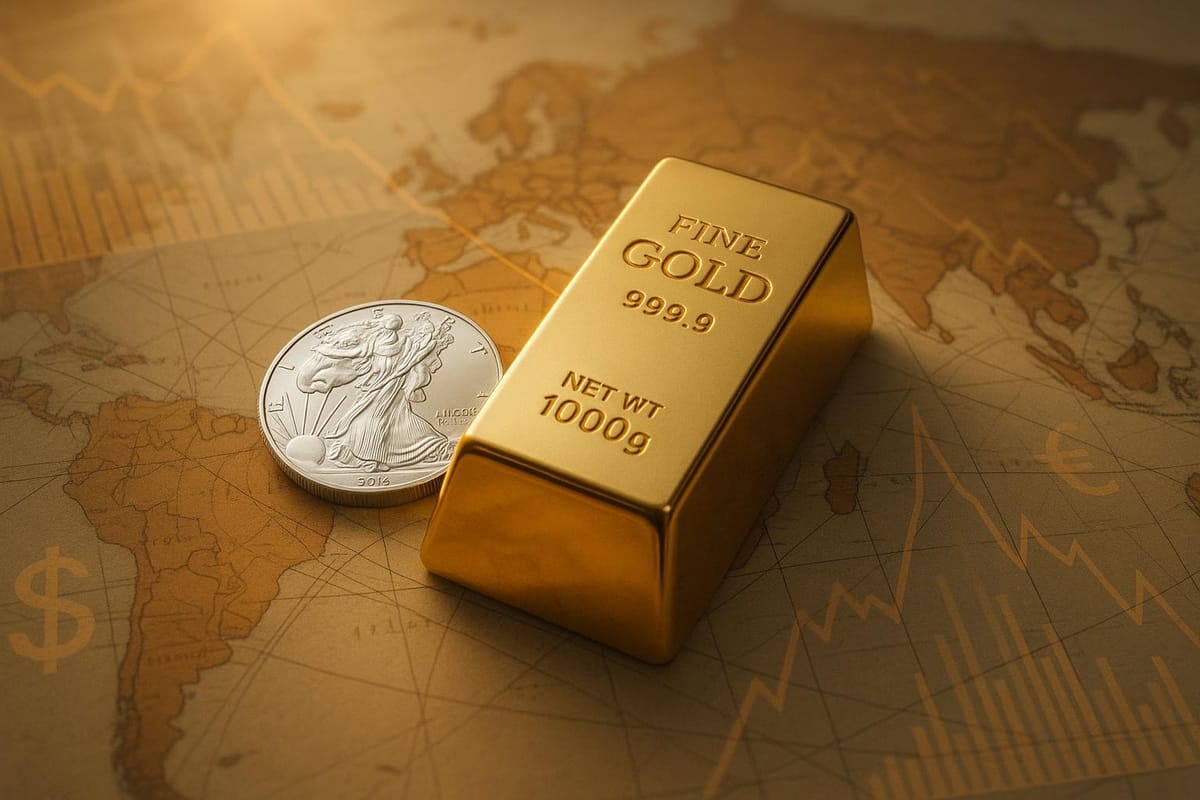
Trade deficits - when a country imports more than it exports - can significantly shape the precious metals market, particularly for gold and silver. Here's how:
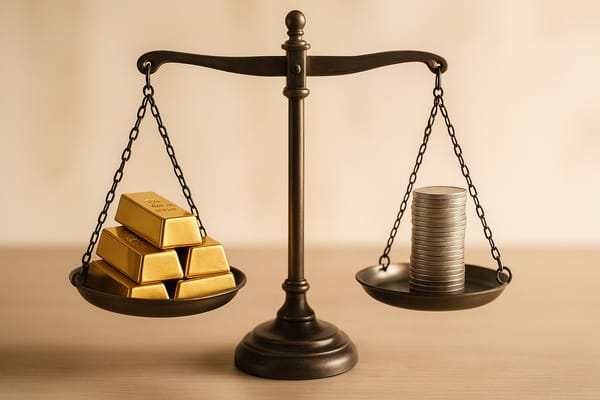
- Weaker Dollar: Persistent trade deficits often devalue the U.S. dollar, making gold and silver more attractive as their prices rise in response.
- Inflation Hedge: Trade deficits can lead to inflation, driving investors to gold and silver to protect their wealth.
- Economic Uncertainty: Investors turn to these metals during unstable economic periods linked to trade imbalances.
- Silver's Dual Role: Silver's industrial demand reacts uniquely to trade deficits, creating price volatility.
- Long-Term Market Shifts: Prolonged trade deficits influence central bank policies, global demand, and investor behavior, sustaining higher prices for precious metals.
Key takeaway: Trade deficits weaken the dollar, fuel inflation, and amplify demand for gold and silver as safe-haven assets. Silver, with its industrial and investment roles, experiences unique price dynamics. Understanding these trends can guide smarter investment decisions.
Gold And Silver Price Update: Trade Deficits, Tariffs, and Panic
1. Currency Devaluation Drives Up Precious Metals Prices
Persistent U.S. trade deficits often push the dollar lower as it finances excess imports in global markets.
When the dollar weakens, precious metals like gold and silver become more appealing to investors worldwide. Since these metals are priced in U.S. dollars, a drop in the dollar's value makes them cheaper for buyers using other currencies. This affordability boosts international demand, which then drives prices higher, creating a ripple effect across global markets.
The relationship between the dollar and precious metals works like a balancing act. As the dollar loses value, gold and silver prices tend to rise, offsetting the currency's declining purchasing power. This inverse connection makes precious metals a popular choice during times of economic uncertainty.
Periods of large trade imbalances often amplify this trend. When monthly trade deficits spike, traders frequently sell dollars, anticipating further declines. Recognizing this pattern, precious metals investors typically increase their holdings in gold and silver as a safeguard against currency devaluation.
But the impact goes beyond just price changes. A weaker dollar reshapes the investment landscape for precious metals. For U.S. investors, the declining value of the dollar reduces their purchasing power abroad. Meanwhile, foreign investors find gold and silver more affordable with their stronger currencies, making these metals attractive as reliable stores of value that hold their worth across different monetary systems.
This creates a cycle where international buyers fuel rising prices, benefiting those who already own these assets. It underscores how trade deficits influence markets far beyond currency fluctuations alone.
While the timing of these effects can vary, the core mechanism stays the same: trade deficits weaken the dollar, boosting the appeal of precious metals as alternative stores of value that aren't tied to the stability of any one country's economy or currency.
2. Inflation Pressures Increase Gold and Silver Demand
Inflation doesn’t just chip away at the value of cash - it also fuels demand for precious metals like gold and silver. As inflation rises, investors often turn to these metals as a way to safeguard their wealth. Gold and silver have long been seen as reliable hedges against both currency devaluation and market instability. When inflation concerns grow, the demand for these metals typically rises, which in turn drives up their prices.
Another factor is how persistent inflation can push real interest rates below zero. In such scenarios, gold and silver become even more attractive to investors. Combined with a weakening dollar and economic uncertainty, this creates a strong pull toward these traditional safe-haven assets.
3. Economic Uncertainty Pushes Investors Toward Safe-Haven Assets
Trade deficits are more than just numbers reflecting import and export imbalances - they reveal deeper concerns about a nation's financial health. Economic uncertainty becomes a significant issue for investors, raising questions about long-term financial stability, potential policy shifts, and the overall state of the economy.
When uncertainty grows, investor behavior tends to follow a predictable pattern. Riskier assets like stocks and corporate bonds often lose their appeal, while safe-haven assets that can weather market volatility become more attractive. Gold and silver lead this category, offering a sense of security as tangible assets that can't be manipulated like paper currencies.
Persistent trade deficits often hint at deeper economic risks, such as potential currency devaluation or abrupt policy changes. In response, investors turn to assets that safeguard their wealth, regardless of fluctuations in broader financial markets.
This "flight to safety" becomes even more pronounced during times of additional economic stress. Political instability, geopolitical tensions, or domestic policy uncertainty can amplify the effects of trade deficits. In such scenarios, demand for precious metals often surges, driving up prices as both institutional and individual investors seek refuge. These market reactions highlight the broader impact of sustained trade deficits.
The shift in demand for precious metals like gold and silver can happen rapidly, reinforcing their reputation as reliable stores of value during turbulent times. Gold, with its historic role as a hedge against uncertainty, often takes center stage.
Silver, however, offers a unique angle. While it shares gold’s appeal as a safe haven, its lower price point makes it more accessible to a broader range of investors. This accessibility can lead to heightened demand and increased price volatility, particularly during periods of economic instability.
4. Silver Faces Different Impacts Due to Industrial Uses
Silver stands apart from gold because it plays a dual role: it's both a popular investment option and a critical material for various industries. This unique combination means that industrial factors have a distinct influence on how silver reacts to trade deficits.
A large share of silver's demand comes from industrial sectors, making it especially sensitive to changes in manufacturing and technology trends. Unlike gold, whose value is largely driven by its status as a safe-haven asset, silver's price is closely tied to its use in industries like electronics, solar panels, medical devices, and automotive components. Thanks to its excellent conductivity and antimicrobial properties, silver is indispensable in these fields. When trade deficits disrupt manufacturing or supply chains, silver prices can fluctuate more dramatically than gold.
Take, for instance, a country with a significant trade deficit. If domestic production slows down, the demand for industrial silver may drop, even as imports rise. This means silver prices don't just respond to currency shifts or investor sentiment - they're also shaped by changes in industrial output and government policies.
Additionally, trade-related supply chain disruptions or lower production costs can lead to short-term spikes in silver prices, setting it apart from gold's steadier behavior. Meanwhile, policy changes - especially those promoting green energy and advanced manufacturing - can drive up silver demand, often overshadowing its role as a safe-haven asset.
5. Long-Term Market Changes from Persistent Trade Deficits
Expanding on the earlier discussion of currency devaluation, long-term trade deficits bring about profound shifts in the precious metals market. These changes go beyond temporary price fluctuations, driving structural transformations that influence investor behavior, central bank policies, and global demand for gold and silver.
When trade deficits stretch over years or decades, a nation’s currency weakens. This erosion of purchasing power encourages both individual and institutional investors to reallocate a portion of their portfolios to gold and silver. The result? A sustained upward pressure on precious metals prices that often persists for extended periods.
Central banks also respond by revising their reserve strategies. Countries with chronic trade deficits frequently diversify their reserves, moving away from their own currency. This shift often involves significant gold purchases, creating a steady demand that helps establish higher price floors in the precious metals market. Over time, this trend drives broader institutional changes, solidifying the role of gold and silver in global finance.
The investment landscape evolves as well. Pension funds, insurance companies, and sovereign wealth funds begin to view precious metals not as speculative assets but as essential components of a balanced portfolio. This institutional adoption generates more predictable demand, reducing the sharp price swings often associated with short-term trading.
Trade deficits also influence the geographical dynamics of silver consumption. As manufacturing relocates to countries with stronger currencies and healthier trade balances, silver consumption patterns shift, impacting regional pricing and availability. This redistribution can reshape the global silver market over time.
Governments often respond to persistent trade deficits with policies that inadvertently boost demand for precious metals. Measures like currency controls, import restrictions, or monetary policies can make gold and silver more attractive to investors. These policy-driven shifts can sustain elevated price levels for extended periods, setting new expectations for the market.
Investor confidence in traditional financial systems and fiat currencies tends to erode during prolonged trade deficits. This loss of trust drives a generational pivot toward hard assets, with gold and silver becoming increasingly prominent in portfolios ranging from individual retirement accounts to institutional endowments. These structural changes reinforce the perception of precious metals as both a hedge against uncertainty and a reliable long-term investment in a world shaped by ongoing trade imbalances.
Comparison Table
Here’s a closer look at how assets and metals perform during trade deficits, highlighting their strengths and weaknesses.
| Asset | Advantages During Trade Deficits | Disadvantages During Trade Deficits |
|---|---|---|
| Gold | • Retains purchasing power • Serves as a hedge against inflation • Gains value as the dollar weakens • Adds portfolio diversification • Long regarded as a reliable store of value |
• Does not provide dividend or interest income • Requires storage and insurance • Prone to short-term price fluctuations |
| U.S. Dollar | • Highly liquid and easy to use in transactions • Widely accepted worldwide • Readily accessible and spendable • No storage needs |
• Loses purchasing power during inflationary periods • Can weaken against other currencies • Sensitive to changes in monetary policy • May decline in value during prolonged trade deficits |
The following table outlines how gold, silver, and industrial metals react differently to trade deficits, based on their market drivers and behaviors.
| Metal Type | Primary Drivers | Trade Deficit Impact | Price Response | Market Behavior |
|---|---|---|---|---|
| Gold | Investment demand, central bank activity, and currency hedging | Typically rises as the dollar weakens, showing a positive correlation | Prices tend to increase during deficit periods | Often sought after as a safe-haven asset |
| Silver | Combination of industrial use, investment demand, and jewelry production | Mixed effects: industrial demand may drop, but investment demand often grows | More volatile than gold, influenced by broader economic trends | Balances its industrial and investment roles, leading to intricate price movements |
| Industrial Metals | Driven by manufacturing, infrastructure, and economic growth | Generally declines, as domestic production challenges reduce demand | Prices often drop during trade deficits | Closely tied to economic cycles, behaving differently from precious metals |
These tables illustrate the contrasting behaviors of assets and metals during trade imbalances. While gold remains a go-to for stability, silver’s dual-purpose nature creates a more nuanced market reaction. Industrial metals, on the other hand, tend to mirror broader economic conditions.
Conclusion
Trade deficits play a pivotal role in shaping the precious metals market. When the dollar weakens, it often increases demand for metals like gold and silver. At the same time, inflation and economic uncertainty drive investors toward these assets as safe havens, especially during periods when trade imbalances point to broader economic concerns.
Silver stands out because of its dual role as both an industrial and precious metal. While its investment demand tends to follow gold's trajectory, its industrial demand is more unpredictable, influenced by factors like manufacturing trends and supply chain issues. This makes silver's price movements more volatile compared to gold, which is typically seen as a steadier store of value. These short-term shifts often pave the way for longer-term changes in the market.
Persistent trade deficits also have far-reaching consequences. Over time, they can influence monetary policies and central bank strategies, which in turn affect the relationship between currencies and metals. Understanding these connections can help investors make better-timed decisions.
Staying informed about trade deficit trends and their impact on precious metals is crucial. Gold and Silver.net serves as a valuable resource, offering analysis on price trends, investment strategies, and the evolving role of these metals in uncertain economic conditions. Whether you're looking at gold as a hedge against currency devaluation or considering silver for its industrial applications, grasping how trade deficits shape these markets can give you a decisive edge in your investment planning.
FAQs
How does a trade deficit weaken the U.S. dollar, and why does this increase the appeal of gold and silver for investors?
When the U.S. imports more goods and services than it exports, it creates a trade deficit. This surplus of U.S. dollars in global markets can lead to a drop in the dollar's value compared to other currencies.
A weaker dollar often makes gold and silver more appealing to international buyers since these metals are usually priced in U.S. dollars. As a result, demand for precious metals can rise, pushing their prices higher. Many investors turn to gold and silver as a way to protect their wealth during times of currency devaluation or economic instability.
How does silver's dual role as an industrial and investment metal impact its price differently from gold during trade deficits?
Silver occupies a fascinating position as both an industrial and investment metal, which gives it price dynamics that differ from gold, especially during trade deficits. While gold is largely seen as a monetary asset, silver’s value is heavily tied to its industrial use. This means that during economic slowdowns - often linked to trade deficits - demand for silver in manufacturing and industry can drop, putting downward pressure on its price.
On the flip side, when monetary instability hits, silver’s investment appeal can surge. In fact, it sometimes even outshines gold as investors turn to it as an alternative store of value. This dual identity - part industrial commodity, part investment asset - makes silver’s price more reactive to shifts in both economic conditions and market sentiment compared to gold.
How do ongoing trade deficits affect central bank policies and the demand for gold and silver?
Persistent trade deficits can play a major role in shaping central bank policies and influencing the global appetite for precious metals like gold and silver. For over a decade, central banks have consistently purchased gold, valuing it as a dependable store of value and a safeguard against currency devaluation.
When trade deficits are coupled with rising national debt and lower interest rates, a country’s currency often weakens. This scenario boosts the allure of hard assets like gold and silver, which are known to hold their value during times of economic uncertainty or inflation. As a result, these metals remain a go-to choice for central banks and private investors looking for financial stability.